Launch offer — valid today only

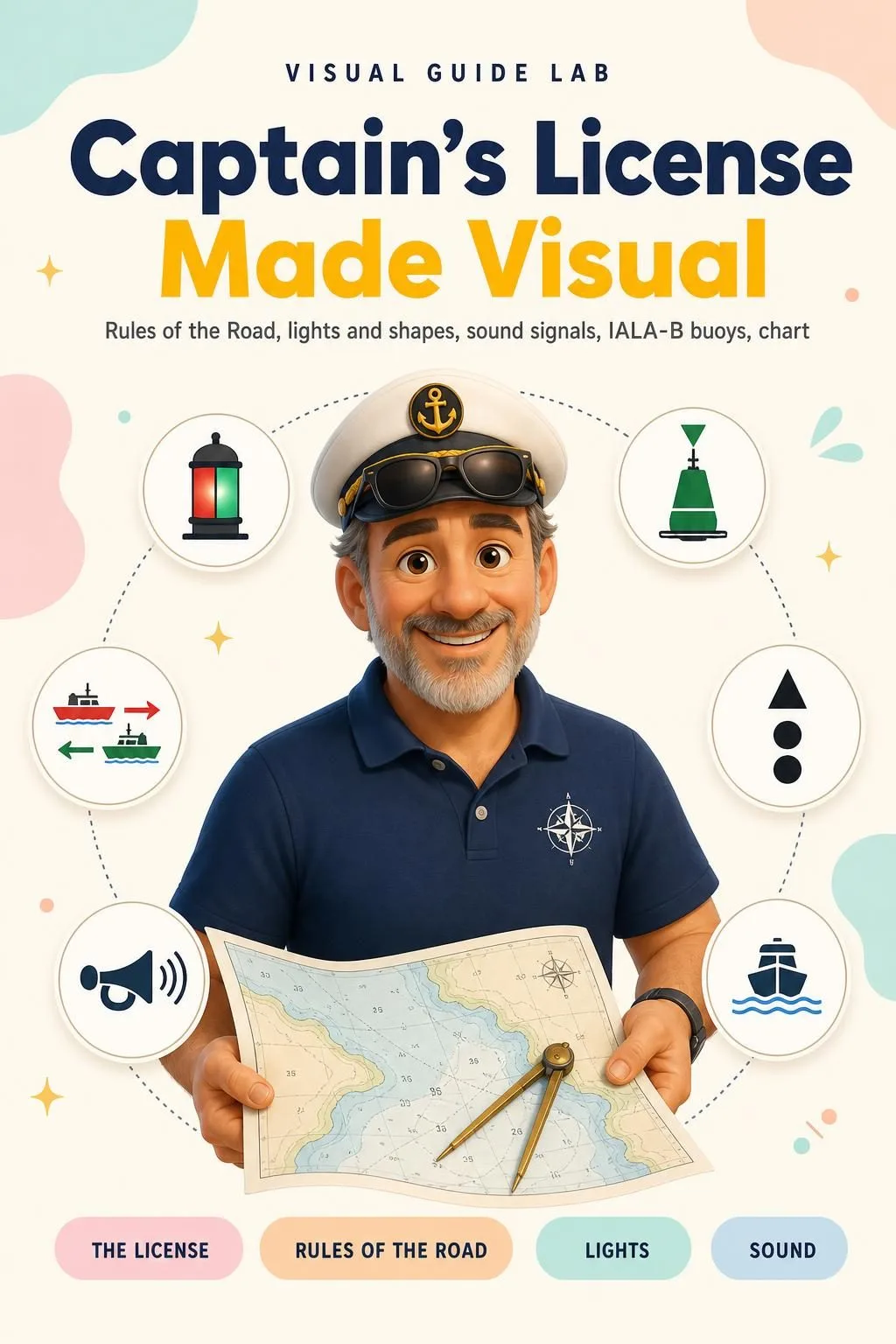
USCG Captain's License Exam, OUPV or Master: Rules of the Road, Lights and Plotting, One Topic per Page With Every Rule Drawn Step by Step!

Rules of the Road, lights and shapes, sound signals, buoys, chart plotting, tides, stability and safety: in the textbook it's a wall of text. Here every topic fits on one page, with the drawing and what you need to remember. 104 illustrated pages.

START STUDYING WITH PICTURES

🔒 Secure checkout · PDF by email · 30-day guarantee

One topic per pagethe drawing teaches you the rule and the text backs it up
104 illustrated pages10 parts, from the license itself to exam practice
Up-to-date sourcesUSCG Navigation Rules, 46 CFR and NOAA U.S. Chart No. 1

This Is What the Pages You Will Study Look Like

One topic per page, the drawing that shows you how it works and the boxes with what you need to know:

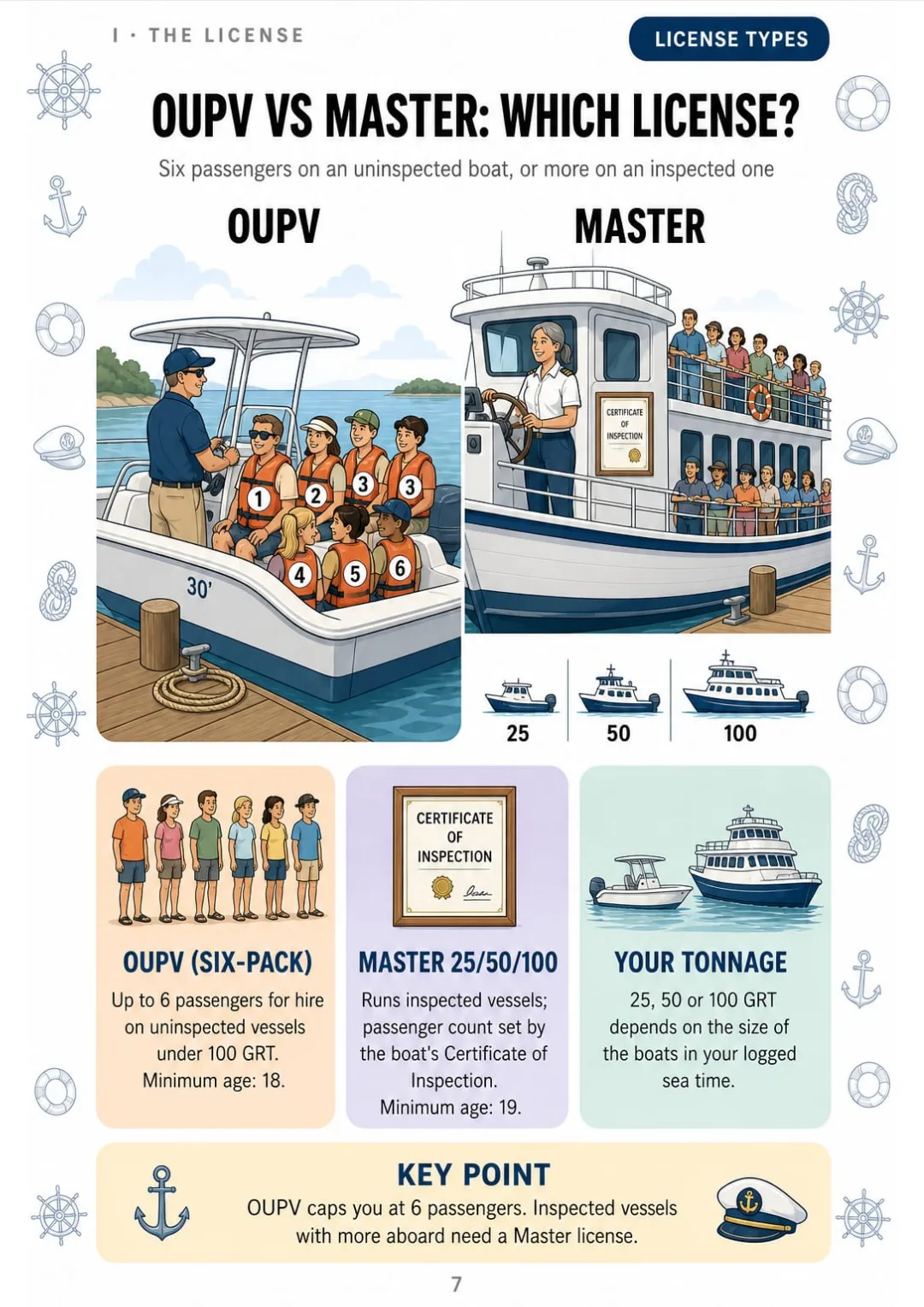
OUPV: 6 passengers, age 18 · Master 25/50/100 GRT: inspected vessels, age 19
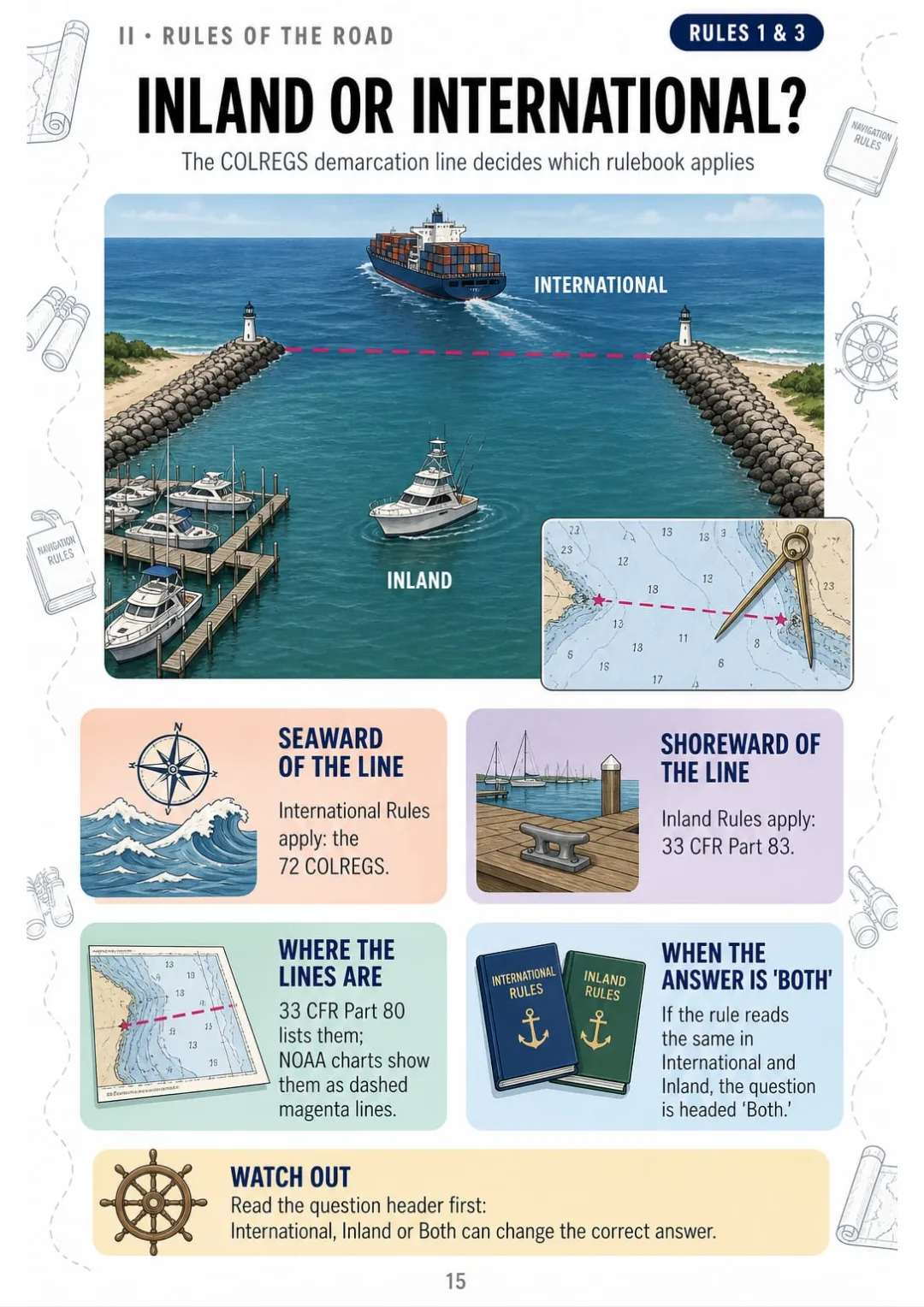
Seaward of the COLREGS line: International. Shoreward: Inland (33 CFR Part 83).
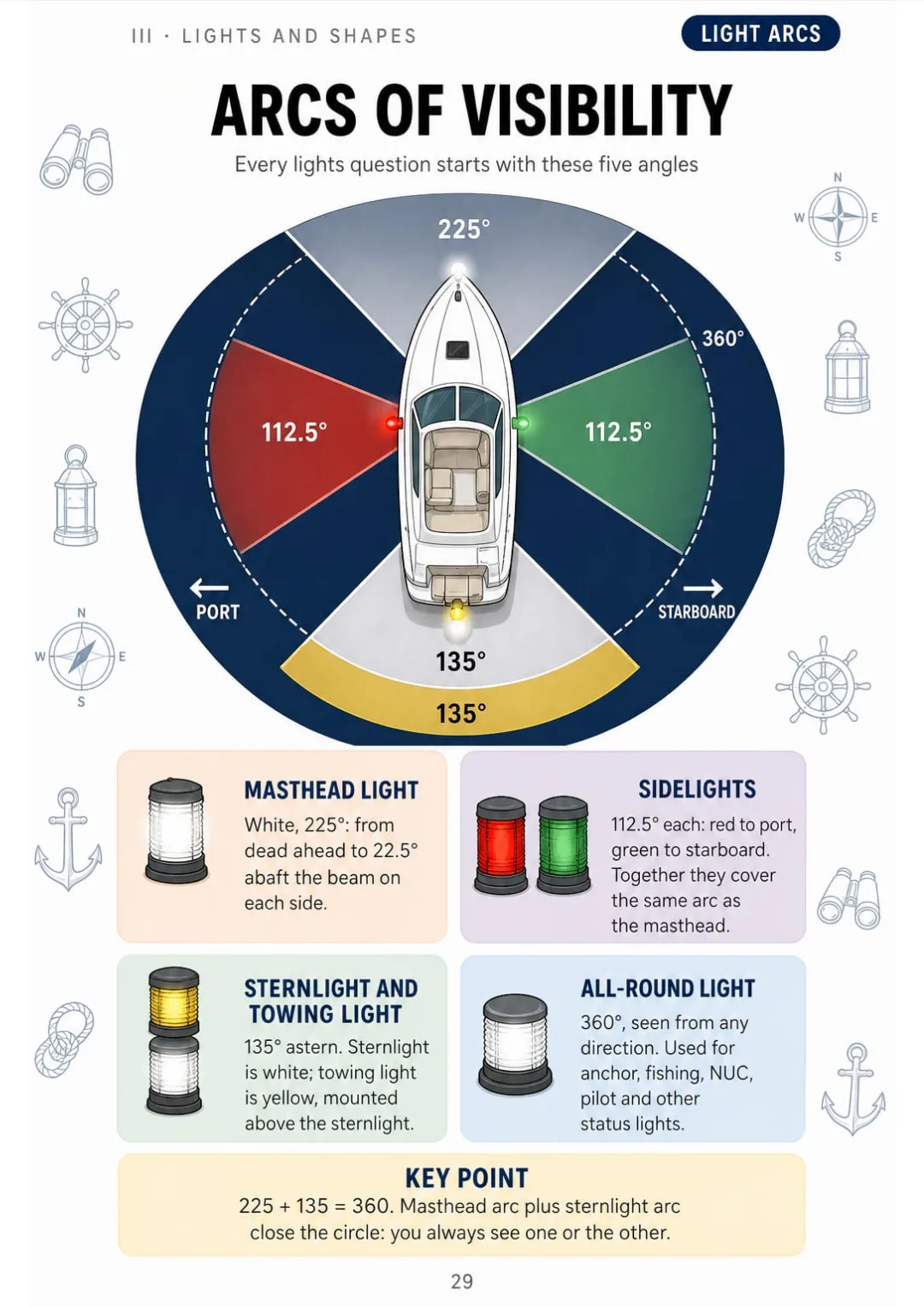
Masthead 225°, sidelights 112.5°, sternlight and towing light 135°, all-round 360°.
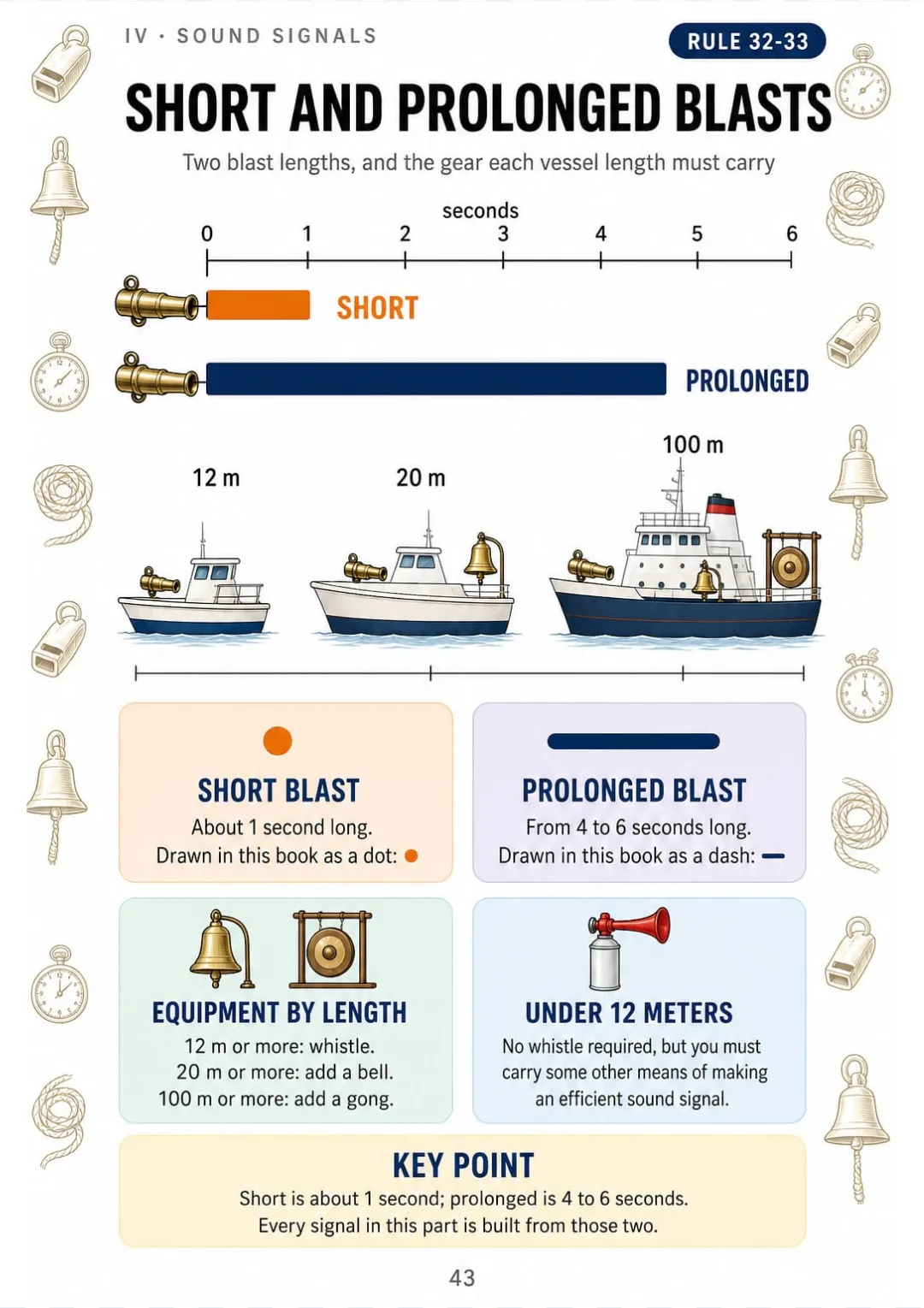
Short = about 1 s, prolonged = 4–6 s; whistle at 12 m, bell at 20 m, gong at 100 m.
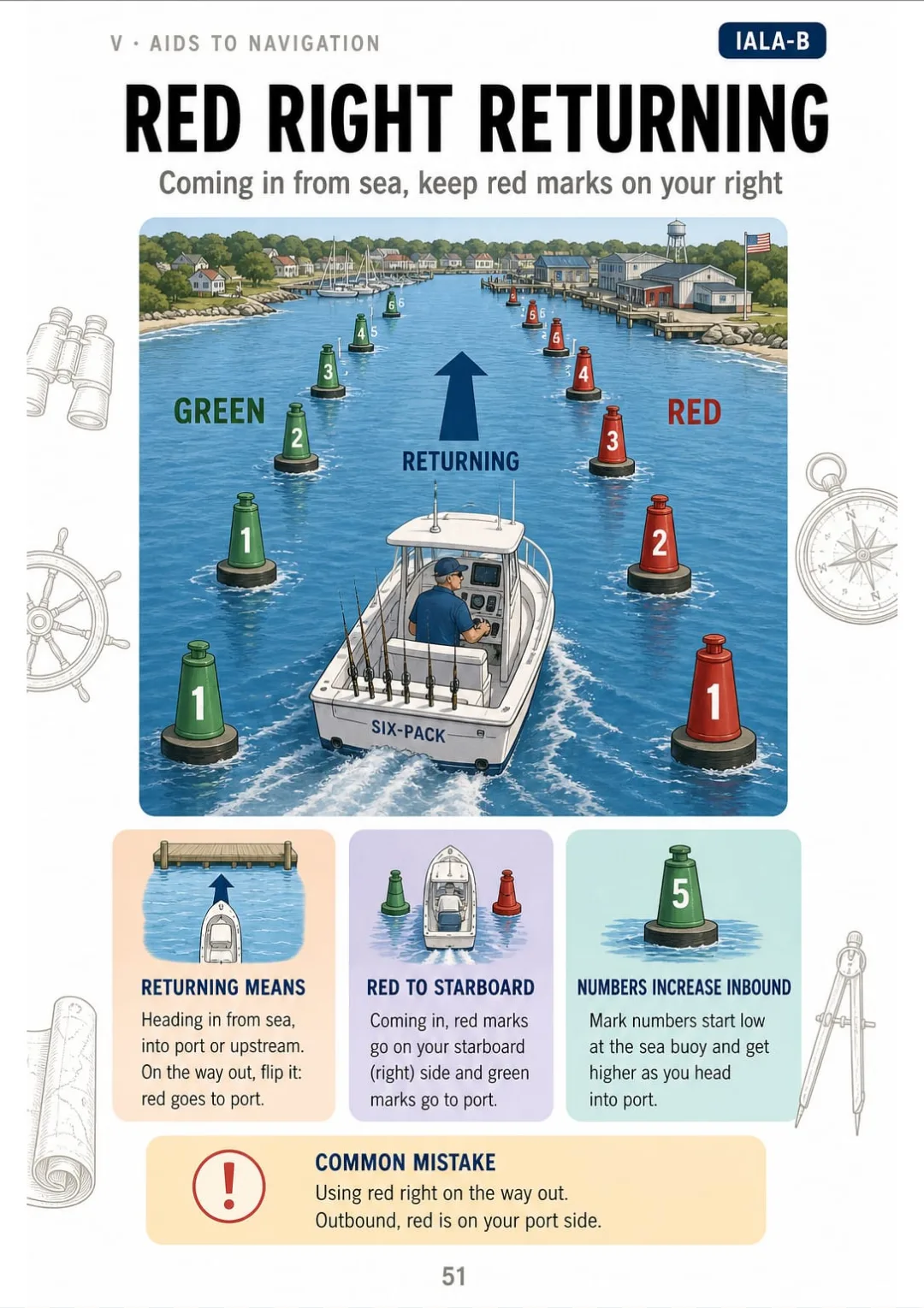
IALA-B: coming in from sea, red to starboard, green to port, numbers going up.
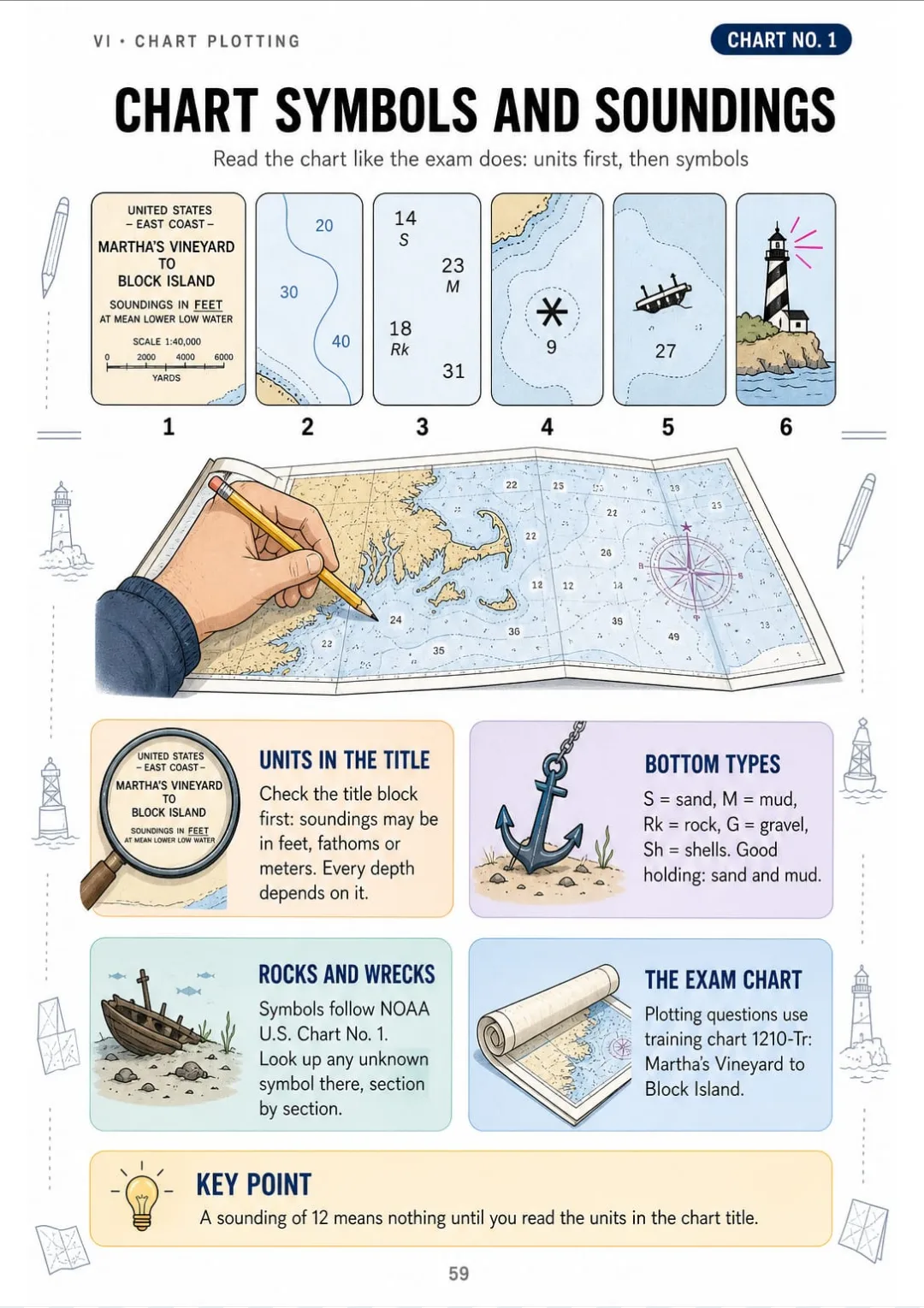
Units, contours, bottom types, rocks, wrecks and lights from U.S. Chart No. 1, on one page.
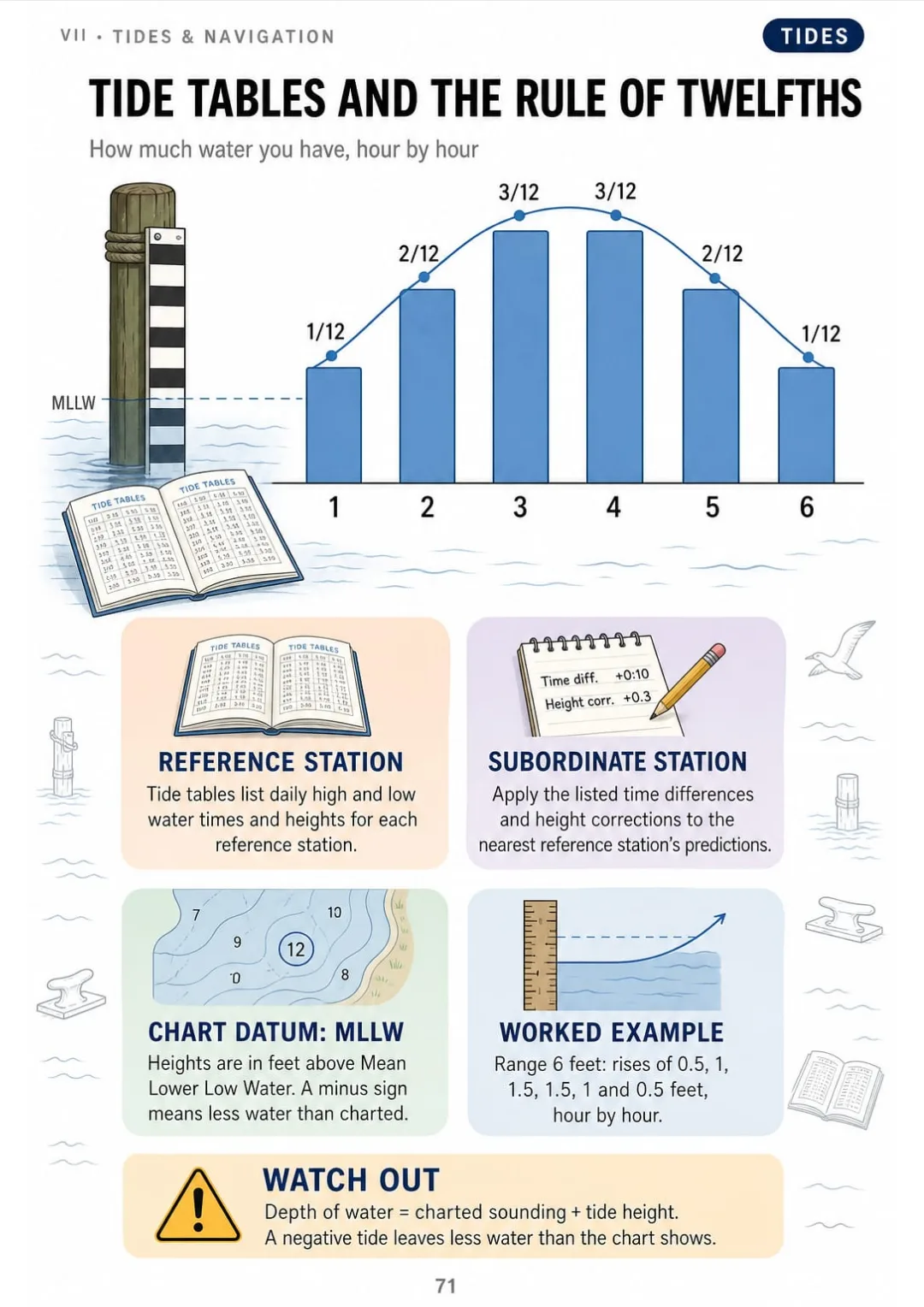
Rule of twelfths: 1/12, 2/12, 3/12, 3/12, 2/12, 1/12 of the range each hour, heights above MLLW.
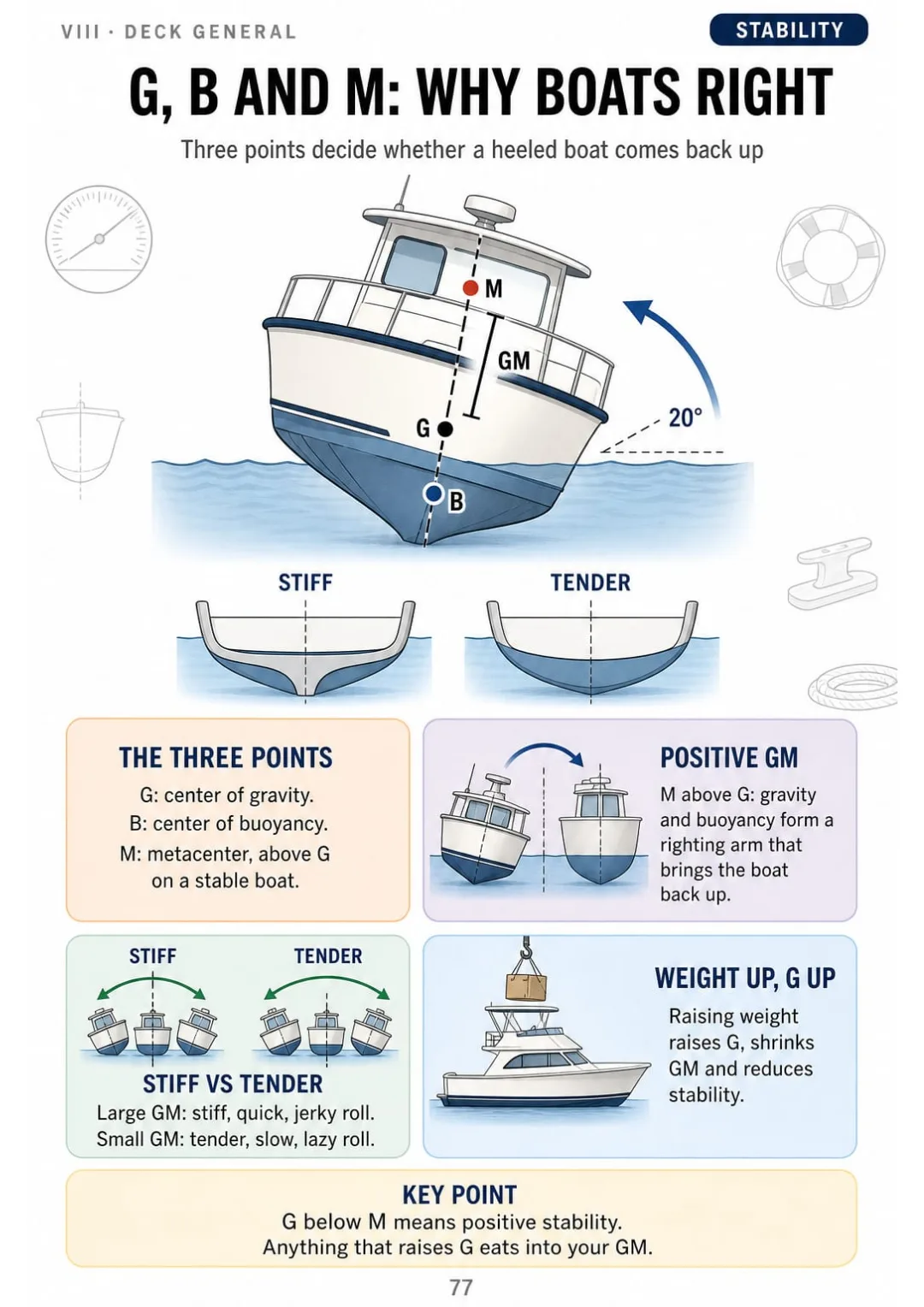
Positive GM rights the boat: large GM is stiff, small GM is tender

Swipe to see more →

These are real pages from the book. The table of contents is the full one: 10 parts and 98 topics.

It's Not Your Memory. Nobody Ever Put It in Order for You.

You've read the arcs of visibility three times. You close the book...

...and you can't remember which light covers 225° and which one covers 135°. It was just lines of text.

Masthead 225°, sidelights 112.5°, sternlight and towing light 135°, all-round 360°.

Here the arcs are one page, drawn from above: the masthead light sweeping 225° forward, each sidelight 112.5°, the sternlight filling the 135° astern.

And on the pages next to it every vessel has its own: the trawler, the tug towing astern, the sailboat, the vessel at anchor and the one not under command.

First you understand why the lights are set up that way. Then what you'd see from ahead, abeam or astern, you remember on your own.

SEE THE DIFFERENCE

Stop memorizing rules you can't picture:

THIS
  • Page after page of dense text
  • Lights and rules without a single drawing
  • On exam day, you don't know where to start
The International Regulations for Preventing Collisions at Sea, 1972, apply on the high seas and in all waters connected therewith navigable by seagoing vessels, whereas the Inland Navigation Rules apply to vessels upon the inland waters of the United States. The boundary between the two regimes is established by the COLREGS demarcation lines described in 33 CFR Part 80, which generally follow lines drawn between headlands, jetties, buoys and other prominent points, and which must be consulted for each harbor, bay and inlet before determining the applicable rule.
FOR THIS
  • Every rule and light drawn
  • One topic per page, with the rules in boxes
  • You remember it because you've seen it
Seaward of the COLREGS line: International. Shoreward: Inland (33 CFR Part 83).
CONTENTS

Take a Look at the 10 Parts and 98 Topics

The license, Rules of the Road, lights and shapes, sound signals, aids to navigation, chart plotting, tides and navigation general, deck general, safety and exam practice: 104 pages, all illustrated

IThe License · pp. 7-14
  1. OUPV vs Master 25-, 50- and 100-ton
  2. Routes: Inland, Near Coastal, Great Lakes
  3. Sea time: 360 or 720 days, 90 in the last 3 years
  4. TWIC, medical exam and drug test
  5. The application package (CG-719B)
  6. Approved course or REC exam
  7. How the modules are scored
  8. Part I review
IIRules of the Road: Steering and Sailing · pp. 15-28
  1. Inland vs International: where the line is
  2. Responsibility: the general prudential rule
  3. Lookout and safe speed
  4. Risk of collision: the steady bearing
  5. Action to avoid collision
  6. Narrow channels and traffic separation
  7. Sailing vessels
  8. Overtaking
  9. Head-on
  10. Crossing
  11. Give-way and stand-on
  12. Who keeps out of whose way
  13. Restricted visibility
  14. Part II review
IIILights and Shapes · pp. 29-42
  1. Arcs of visibility: masthead, sidelights, sternlight
  2. Power-driven vessels underway
  3. Towing astern, alongside and pushing ahead
  4. Sailing vessels and vessels under oars
  5. Fishing: trawling vs not trawling
  6. Not under command and restricted in ability to maneuver
  7. Constrained by draft (International only)
  8. Pilot vessels
  9. Anchored and aground
  10. Day shapes: ball, cone, diamond, cylinder
  11. Special Inland lights
  12. Vessels under 12 meters and seaplanes
  13. How to read a lights question
  14. Part III review
IVSound and Light Signals · pp. 43-50
  1. Short and prolonged blasts
  2. Maneuvering signals: International vs Inland
  3. The danger signal
  4. The bend signal
  5. Signals in restricted visibility
  6. Bells and gongs at anchor and aground
  7. Distress signals
  8. Part IV review
VAids to Navigation (IALA-B) · pp. 51-58
  1. Red right returning
  2. Lateral marks: cans, nuns and numbers
  3. Safe water, isolated danger and special marks
  4. Light characteristics: Fl, Q, Iso, Oc, Mo (A)
  5. Intracoastal Waterway marks
  6. Ranges and dayboards
  7. Western Rivers and private aids
  8. Part V review
VIChart Plotting Step by Step · pp. 59-70
  1. Chart symbols and soundings
  2. Latitude, longitude and the dividers
  3. The compass rose: true and magnetic
  4. TVMDC: variation and deviation
  5. Plotting a course and measuring distance
  6. Speed, time and distance
  7. Dead reckoning
  8. Fixes: two and three bearings
  9. The running fix
  10. Set and drift
  11. Danger bearings and distance off
  12. Part VI review
VIITides, Currents and Navigation General · pp. 71-76
  1. Tide tables and the rule of twelfths
  2. Tidal currents: flood, ebb and slack
  3. Weather for mariners: fronts, fog, Beaufort
  4. Electronic navigation: GPS and radar basics
  5. Light List, Coast Pilot and Notice to Mariners
  6. Part VII review
VIIIDeck General: Stability and Seamanship · pp. 77-84
  1. Center of gravity and metacenter
  2. Free surface effect
  3. Loading and freeboard
  4. Knots: bowline, cleat hitch, clove hitch
  5. Anchoring: scope and holding
  6. Docking and line handling
  7. Heavy weather
  8. Part VIII review
IXSafety and Emergencies · pp. 85-96
  1. Life jackets and throwables
  2. The fire triangle and extinguisher classes
  3. Man overboard
  4. Abandon ship and liferafts
  5. VHF channel 16: Mayday, Pan-Pan, Sécurité
  6. Visual distress signals, EPIRB and DSC
  7. Hypothermia and cold water
  8. Pollution: oil and garbage placards
  9. Marine sanitation devices
  10. Running a six-pack trip: passengers and briefing
  11. Casualty reporting and drug and alcohol testing
  12. Part IX review
XExam Practice · pp. 97-104
  1. How the module exams work
  2. Practice questions 1–5
  3. Practice questions 6–10
  4. Practice questions 11–15
  5. Practice questions 16–20
  6. Practice questions 21–25
  7. Practice questions 26–30
  8. Your final-week plan

What If Every Topic Fit on a Single Page?

Picture this:

Instead of rereading half a page about the steady bearing without being able to see it...

...you open the page and find two boats drawn from above, the bearing line that doesn't move and who gives way, all in one picture.

IALA-B: coming in from sea, red to starboard, green to port, numbers going up.

And lights, buoys, sound signals, TVMDC and the rule of twelfths turn into drawings and tables you can read at a glance.

You stop repeating and start understanding.

That's exactly what Captain's License Made Visual does. It's not “just another manual.” It's 10 parts and 97 illustrated topics, and at the end 30 exam-style questions with the answers explained. Because what your brain sees in order, it remembers.

Because what your brain sees organized, it remembers.

Here Is What You Get with Captain's License Made Visual:

Ipp. 7-14

The License

OUPV vs Master 25, 50 and 100 ton, routes, sea time, TWIC, medical and drug test, the CG-719B package and how the modules are scored.

IIpp. 15-28

Rules of the Road: Steering and Sailing

Inland vs International, lookout and safe speed, the steady bearing, narrow channels, overtaking, head-on, crossing, stand-on and give-way, and restricted visibility.

IIIpp. 29-42

Lights and Shapes

Arcs of visibility, power-driven, towing, sailing and fishing vessels, NUC and RAM, anchored and aground, day shapes and how to read a lights question.

IVpp. 43-50

Sound and Light Signals

Short and prolonged blasts, maneuvering signals in International and Inland, the danger and bend signals, fog signals, bells, gongs and distress signals.

Vpp. 51-58

Aids to Navigation (IALA-B)

Red right returning, cans and nuns, safe water and special marks, light characteristics, ICW marks, ranges and Western Rivers aids.

VIpp. 59-70

Chart Plotting Step by Step

Chart symbols, latitude and longitude, the compass rose, TVMDC, course and distance, speed-time-distance, dead reckoning, fixes, running fixes and set and drift.

VIIpp. 71-76

Tides, Currents and Navigation General

Tide tables and the rule of twelfths, flood, ebb and slack, weather for mariners, GPS and radar basics, Light List, Coast Pilot and Notice to Mariners.

VIIIpp. 77-84

Deck General: Stability and Seamanship

Center of gravity and metacenter, free surface effect, loading and freeboard, knots, anchoring scope, docking and heavy weather.

IXpp. 85-96

Safety and Emergencies

Life jackets, fire extinguishers, man overboard, liferafts, VHF channel 16, EPIRB and DSC, hypothermia, pollution placards, MSDs and running a six-pack trip.

Xpp. 97-104

Exam Practice

How the module exams work, 30 exam-style questions with the answers explained and your final-week plan.

At the end of the book: 30 exam-style questions with the answers explained and a review page closing every part.
And That Is Not All: 2 More Books, Free

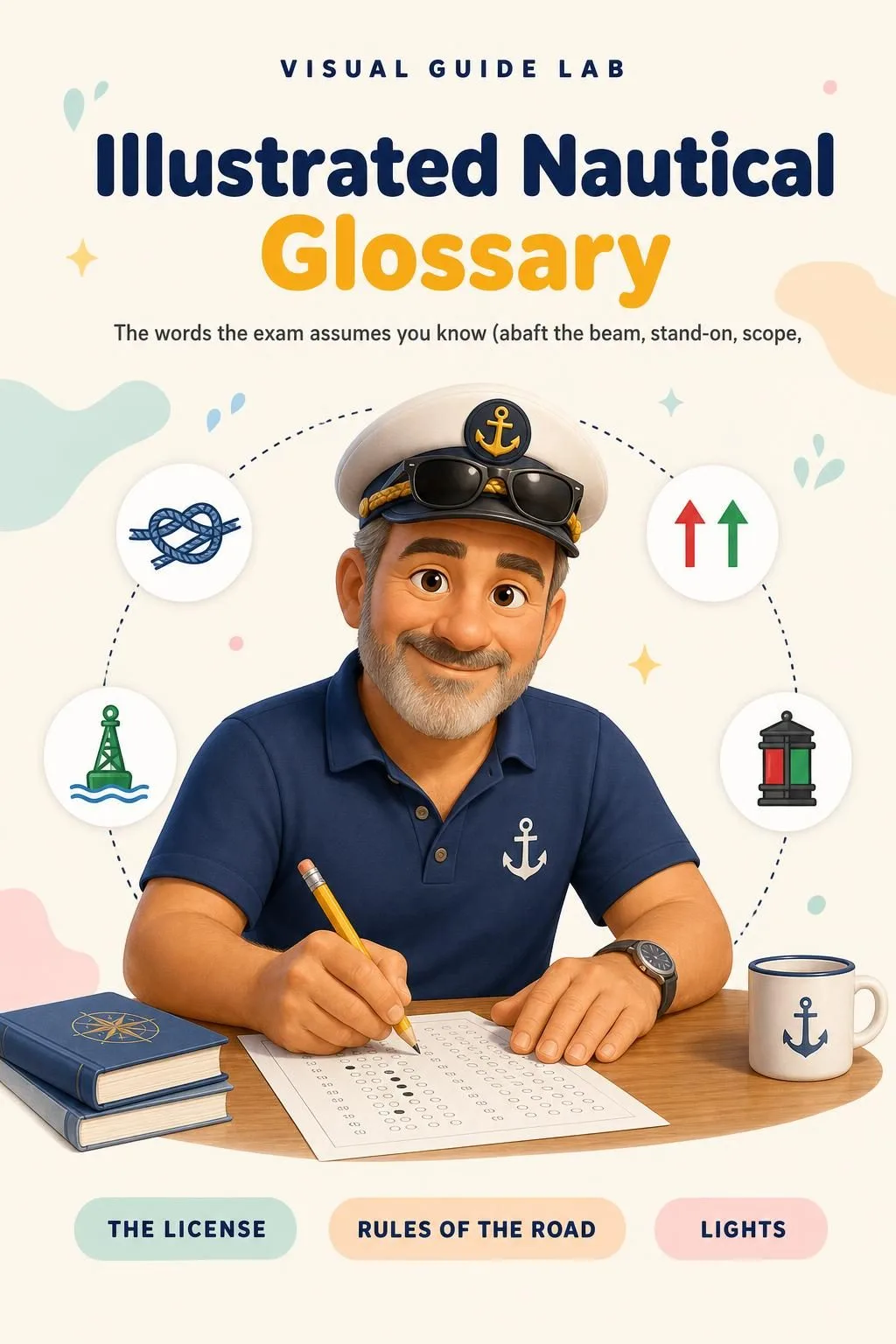
Illustrated Nautical Glossary

BONUS 1: «Illustrated Nautical Glossary»

Value on its own: US$ 14.90

The words the exam assumes you know (abaft the beam, stand-on, scope, freeboard, set, drift, deviation, sounding…), each one with a small drawing and a plain-English definition.

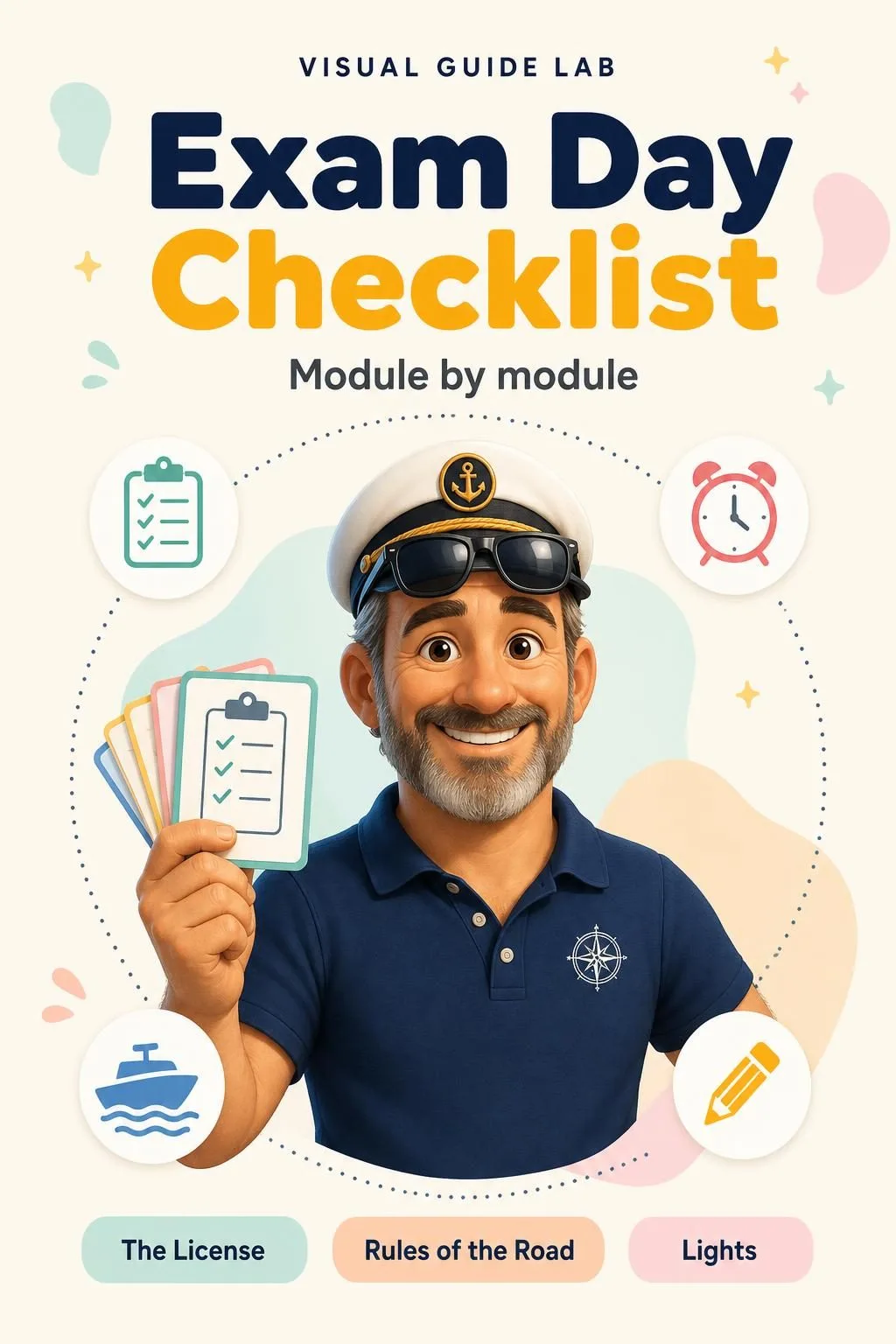
Exam Day Checklist

BONUS 2: «Exam Day Checklist»

Value on its own: US$ 17.90

Module by module: what the course or exam center provides and what to bring for chart plotting (dividers, parallel rules or plotter, pencil), how to use your time, and which pages to reread the week before.

Captain's License Made Visual + 2 Free Books

  • Captain's License Made Visual: 104 illustrated pagesUS$ 63
  • BONUS 1: Illustrated Nautical GlossaryUS$ 14.90
  • BONUS 2: Exam Day ChecklistUS$ 17.90
  • High-resolution PDF to printIncluded
Total value US$ 95.80
YOUR PRICE:
US$ 27
You save US$ 68.80
YES, I WANT CAPTAIN'S LICENSE MADE VISUAL FOR US$ 27

📄 This is a digital PDF book sent to your email: nothing is printed or shipped.

Secure purchaseEncrypted payment30-day guarantee

PDF by email: Captain's License Made Visual reaches your inbox as a PDF, and the two free books come by email too. One-time payment, no installments or hidden costs.

Is This Book for You?

You're taking an approved course

You're taking an approved course

Rules of the Road, lights, buoys and plotting, one topic per page, to review between classes and trips.

Your exam is coming up

Your exam is coming up

Every module reviewed at a glance, and at the end 30 exam-style questions with the answers explained.

You already run a boat

You already run a boat

The exam's version of what you do every day: who gives way, which light means what, and how to plot a fix on paper.

To Sum Up: Here Is What You Get

US$ 95.80US$ 27
YES, I WANT CAPTAIN'S LICENSE MADE VISUAL FOR US$ 27

📄 This is a digital PDF book sent to your email: nothing is printed or shipped.

30DAYS
GUARANTEE

30-Day Guarantee

30-day guarantee: tell us what didn't work and we'll refund 100%.

You have 30 days to try Captain's License Made Visual and the two bonus books. If it doesn't help you study, tell us what didn't work and we'll refund 100% of what you paid. One-time payment, no subscriptions.

Frequently Asked Questions

How do I get it?

After your purchase you get an email with Captain's License Made Visual as a high-resolution PDF, to read on your phone or print. The two bonus books, Illustrated Nautical Glossary and Exam Day Checklist, come by email too.

Is it a monthly or one-time payment?

One-time payment of US$ 27. No installments, no subscription.

Who is it for?

For anyone preparing for the USCG OUPV (Six-Pack) or Master 25-, 50- or 100-ton exam, through an approved course or at a Regional Exam Center, and for captains who want a visual review. Check the table of contents above to see the topics.

What sources is it based on?

The USCG Navigation Rules and Regulations Handbook (International and Inland, 33 CFR Part 83 and the Part 80 demarcation lines), 46 CFR Parts 10, 11 and 16, the USCG Light List, NOAA U.S. Chart No. 1 and training chart 1210-Tr.

Is this official USCG material?

No. It's independent study material. It isn't published or endorsed by the U.S. Coast Guard or the National Maritime Center.

Does it replace an approved course?

No. It doesn't replace an approved course, your sea time or training on the water. It's a visual guide to study and review alongside them.

Are the practice questions the real exam questions?

No. The 30 exam-style questions are written for this book to help you practice. They're not official USCG questions.

Can I print it?

Yes. It's a PDF: read it on your phone, tablet or computer, or print the pages you want to keep on hand.

What if I don't like it?

You have 30 days. Tell us what didn't work and we'll refund 100%.

One Last Thing Before You Decide...

You don't have to reread the same page hoping it sticks this time.

You don't have to memorize lights and rules you can't picture.

And you definitely don't have to walk into the exam not knowing where to start.

One last thing before you decide: the Rules, the lights and the chart don't change. What changes is seeing them drawn, one topic per page, in the same order every time.

One-time payment: US$ 27 · Guarantee: 30 days · PDF by email

YES, I WANT CAPTAIN'S LICENSE MADE VISUAL FOR US$ 27

📄 This is a digital PDF book sent to your email: nothing is printed or shipped.